
Contact us
RECEPTION
+4 0724 003 658
reservations@zabola.com
EVENT MANAGER
Mrs. Imola Gazda
+4 0722 180 152
events@zabola.com
In conversation with Gregor Roy Chowdhury, Zabola Estate (Transylvania)

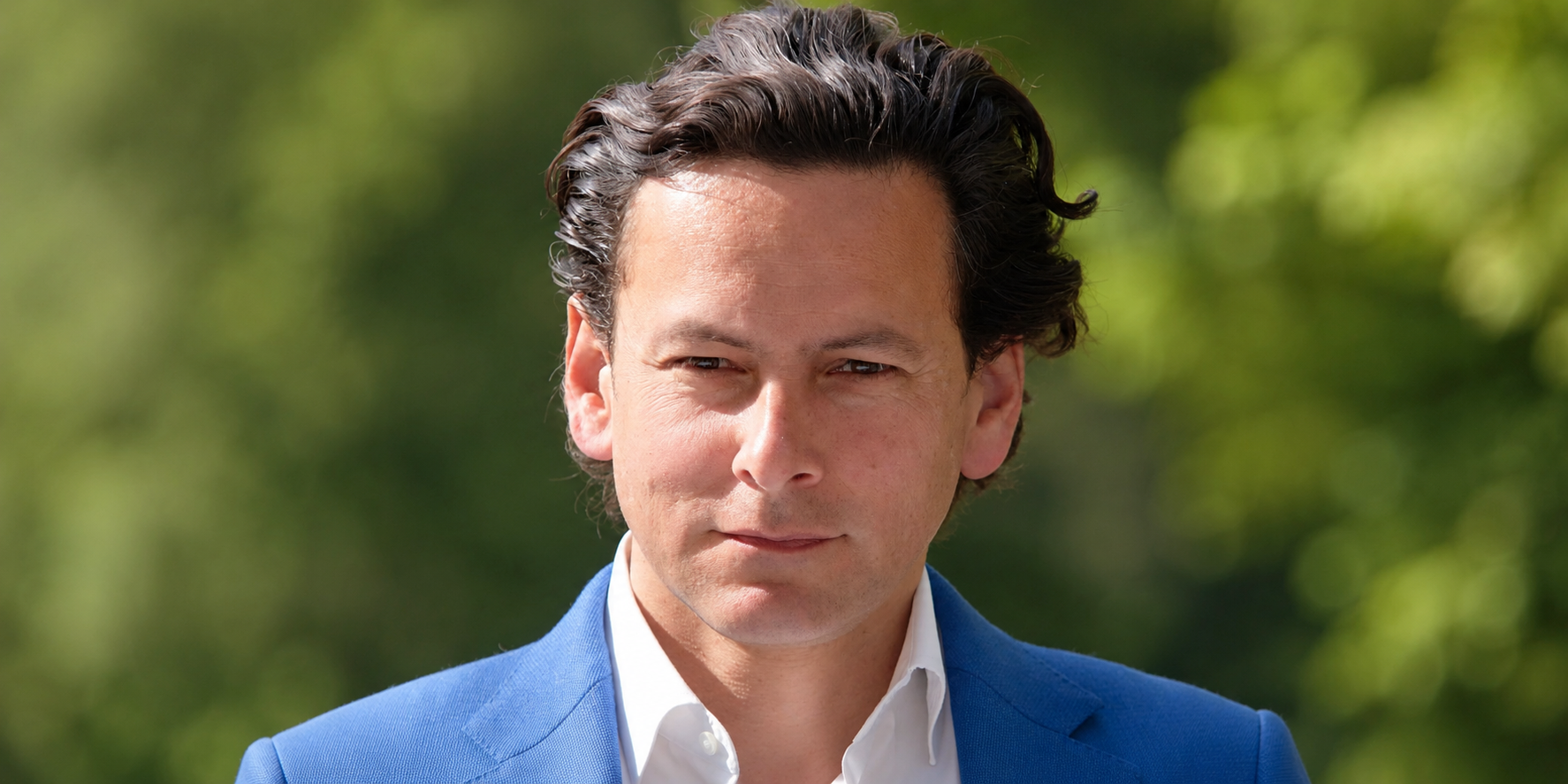
Tell us briefly about the history of Zabola Estate. Zabola is an old family estate in the Szekler part of Transylvania, in Covasna County. It belonged to the Mikes family for centuries, so for us it is not just a property. It is part of our family history, but also part of the history of this region. […]
Tell us briefly about the history of Zabola Estate.
Zabola is an old family estate in the Szekler part of Transylvania, in Covasna County. It belonged to the Mikes family for centuries, so for us it is not just a property. It is part of our family history, but also part of the history of this region.
Like many estates in this part of Europe, Zabola had a very difficult 20th century. After the war and during communism, the estate was nationalised and used for other purposes. When it came back to the family, the question was not simply how to restore a few old buildings. The real question was how to give the place a future again.
The restoration was not a glamorous process. There was no large old family fortune waiting to be spent. Much of it was done slowly, very practically, with local people, by hand, year after year. In that sense Zabola was not only restored as a building. It also helped rebuild a relationship with the village and with the place itself.
We never wanted Zabola to become a museum. It should be alive.
What inspired you to develop a luxury hospitality project? Why luxury?
I would not say we started with the idea of creating a “luxury hotel”. That sounds too planned. We started with an old estate and a very practical question: how can Zabola survive without being sold, divided up, or turned into something artificial?
Luxury came later as a word. For us, it became a way of protecting the place. If we had tried to make a mass-market project, we would have damaged exactly what makes Zabola special.
Luxury here means space, quietness, privacy, nature, time and a certain authenticity. It is not about showing off. It is fewer guests, more space, better service, and more respect for the place.
You have been consistently investing not only in the product but also services. Tell us more.
The visible investments are easier to explain: rooms, bathrooms, heating, infrastructure, gardens, restoration of the houses, the spa and the forest sauna. But the harder part is the service.
Zabola is not one hotel building where every room is the same. It is several houses, each with its own character. That is part of the charm, but operationally it is not simple. We have had to invest in training, food, communication, guest experiences, maintenance, and in helping the team understand what kind of place Zabola is.
The aim is not to make everything standard. The aim is to make the experience reliable while keeping the individuality.
Also, many things here are not “new concepts”. They are connected to what was already here: the park, the mineral landscape, the forest, horses, local food, old houses, and a slower rhythm of life. We try to improve the comfort, but not erase the character.
What has been your approach to achieve consistency in services?
This is still one of our main challenges. In a place like Zabola, consistency cannot mean that everything becomes rigid or corporate. That would not fit.
We try to create clearer systems, better communication and more training, but without losing the natural warmth of the place. The service should be attentive, but not stiff. Guests should feel that people care, not that they are following a script.
We are still improving. I think one has to be honest about that. But this balance — between reliability and naturalness — is very important for Zabola.
Please share more about the guest profile. To what extent are you targeting international travellers?
Romanian guests and guests from the region have always been important for us, and they remain important. But Zabola is also becoming more interesting for international travellers.
The people who understand Zabola are usually not looking for a normal resort. They are looking for something quieter and more individual. They like history, nature, privacy, food, wildlife and a slower rhythm. Many are well travelled and do not need another polished destination that could be anywhere.
With Small Luxury Hotels of the World, we hope to reach more of these international guests — not everyone, but the right people. Zabola is not for mass tourism, and it should not become that.
How has the property performed so far this year and what are your expectations for the rest of the year?
This year is a transition year for us. We see more international interest and better visibility, especially through Small Luxury Hotels of the World. But Zabola is still a destination that needs to be explained. Transylvania is not yet as obvious for luxury travellers as Tuscany, Provence or the Alps.
That is also what makes it interesting. There is still a sense of discovery here.
For the rest of the year, I am not only interested in occupancy. Of course, occupancy matters, but the more important question is positioning: attracting the right guests, improving direct bookings, increasing length of stay, and making sure the experience is strong enough for a more international audience.
Zabola Estate is now part of Small Luxury Hotels. What motivated the choice of affiliation?
SLH made sense because it is not a large chain. We did not want to become part of something that standardises the hotel.
Zabola needs more international visibility, but it also needs to keep its character. SLH is useful because many of their guests are looking for smaller, independent hotels with personality. That fits us much better than a conventional brand.
It is also a signal to guests that Zabola has reached a certain level of comfort and service, while still remaining very local and personal.
The Considerate Collection and the Wellbeing Collection are also relevant for us. For Zabola, wellbeing and sustainability are not separate hotel departments. They are connected to the estate itself: the park, forest, wetlands, heritage buildings, local food, walking, wildlife observation, the forest sauna, and the slower rhythm of being in a protected landscape.
Through the Roy Chowdhury-Mikes Foundation and Conservation Transylvania, we are trying to give this a more structured form. It is still modest and developing, but the direction is clear: landscape protection, biodiversity, responsible wildlife observation, education, and a stronger link between tourism and conservation.
Are there any challenges for your operations? Staffing, infrastructure etc.
Yes, many. It is beautiful to run an estate in a rural part of Transylvania, but it is not easy.
Staffing and training are constant topics. Infrastructure is more complicated than in a city. Seasonality is strong. Access is better than many people think, but guests still need to make the effort to come here.
Also, we are dealing with historic buildings and a large estate. Maintenance never stops. You cannot just impose a hotel system on a place like this. The operation has to respect the estate.
But I also think these difficulties protect Zabola. If it were too easy, the place would probably already have been overdeveloped.
What novelties are you planning?
We are improving several things, but carefully. I am always a little cautious with “new concepts” in a historic place. It is easy to add too much.
We are working on wellness, nature experiences, better pre-arrival communication, more thoughtful local activities, food and garden connections, and a clearer way of telling the estate’s heritage and conservation story.
The conservation side is becoming more important and more concrete. We have our own conservation programme through the Roy Chowdhury-Mikes Foundation and Conservation Transylvania. The aim is not to make Zabola look “green” as a marketing exercise, but to take better care of the landscape around us: forest, wetlands, meadows, wildlife, local knowledge and the way guests move through this environment.
We are working on wildlife interpretation, responsible observation, education and research partnerships. We are also trying to make guests understand that wildlife is not entertainment. It is part of a living landscape, and we are guests in that landscape as much as they are.
At the same time, we are now connected with The European Nature Trust and Foundation Conservation Carpathia through carefully curated conservation travel in the Romanian Carpathians. I like this because it places Zabola inside a much larger and serious conservation story: forest protection, wildlife monitoring, reforestation, coexistence and the long-term vision of a new national park in the Făgăraș Mountains.
For Zabola, the right direction is not “wildlife tourism” in the superficial sense. It is quieter, smaller, more respectful. Tourism should help people understand the landscape better, and if done well, it can also help support conservation.
The old idea of healing is also not foreign to Zabola. This area has mineral waters, forests and a long tradition of people coming for health and recovery. So I would rather say we are reconnecting with something that already belongs here, not inventing a fashionable wellness product.
For me, the best additions are those that feel natural — as if they should always have been part of Zabola.
Which are your personal top 5 off-the-beaten-track tips close to Zabola Estate?
First, I would say: do not rush away from Zabola too quickly. Spend time in the park, walk slowly, use the forest sauna, sit outside, listen to the place. Many guests want a list of things to do, but sometimes the best thing here is to do less.
Second, I would recommend Ghelința, especially the medieval church and frescoes. It is close, authentic and still not overrun.
Third, Târgu Secuiesc is worth discovering. It is a very Szekler town, with its courtyards, old structure and local character.
Fourth, the forests and hills around Covasna and Comandău are very special, especially if explored with someone local who understands the landscape.
Fifth, if there is time for a longer excursion, Lake Saint Ana and the Mohos peat bog are extraordinary. They are better known, but still very much worth it if visited slowly.
In general, I think this region is not about one single monument. It is about rhythm: villages, forests, mineral waters, churches, horses, food, and a landscape that still feels alive.
Additional note:
One point which is important to me, and which perhaps sits behind many of the answers, is stewardship. Zabola is not only a hotel. It is also a park, a landscape, a local employer, a heritage site, and a place where wildlife and people have to coexist.
Our own conservation work is developing through the Roy Chowdhury-Mikes Foundation and Conservation Transylvania. This includes responsible wildlife observation, habitat and landscape protection, education, research cooperation and working with local knowledge. I would not want to overstate it, because we are still building it step by step, but it is central to how I see Zabola’s future.
The cooperation with The European Nature Trust and Foundation Conservation Carpathia is important because it connects Zabola to a larger Carpathian conservation movement. Their work is on another scale, and we are glad to be part of that story. But our responsibility starts at home: with the estate, the village, the forest, the wetlands, the guests we receive and the way we explain this place.
For me, the long-term responsibility is not only to restore rooms and receive guests. It is to take care of the place as a whole.